
CUSP Clear
Specialist liquidation, settlement, and default-management infrastructure, from the unwind ladder to descending-price auctions.
Liquidation is where most lending designs quietly fall apart on this collateral. They assume a liquidator can dump the position into a deep market the moment it goes bad. On event collateral there often is no such market. So CUSP Clear runs a structured default-management process instead of generic keepers: it works down a ladder of exits from cheapest to most forceful, and clears what remains through specialist auctions.
Why keepers fail here
A keeper bot is built for one job: sell instantly into a continuous market. Event collateral denies it both halves.
- The book thins out exactly when a position needs clearing, so the bot sells into air and crashes the price it was trying to realize.
- The bot has no view on the resolution, so it misprices the lot, and whatever it gets wrong, the protocol inherits.
Clearing this collateral takes participants who understand it. That is who the auction is for. But the auction is the late rung of a ladder, not the first move.
The unwind ladder
When a position becomes unhealthy, immediately selling it into a thin public order book can create unnecessary losses for lenders and borrowers. CUSP Clear tries the cheapest exit first and escalates only as needed:
- Repayment from the account's available USDC.
- Cancellation of open risk-increasing activity.
- Merging complete YES and NO sets back into collateral.
- Conversion of logically offsetting positions.
- Redemption of settled claims.
- Execution through available venue liquidity.
- Specialist request-for-quote auctions among verified liquidators.
- Descending-price auctions, the mechanism detailed below.
- Backstop liquidity, so no lot is ever left open.
The first five rungs cost the borrower almost nothing: they reduce exposure without selling anything into a stressed book. Verified liquidators on the later rungs receive the relevant Outcome Risk Object and compete to purchase difficult event inventory.
How one auction runs
The lot opens
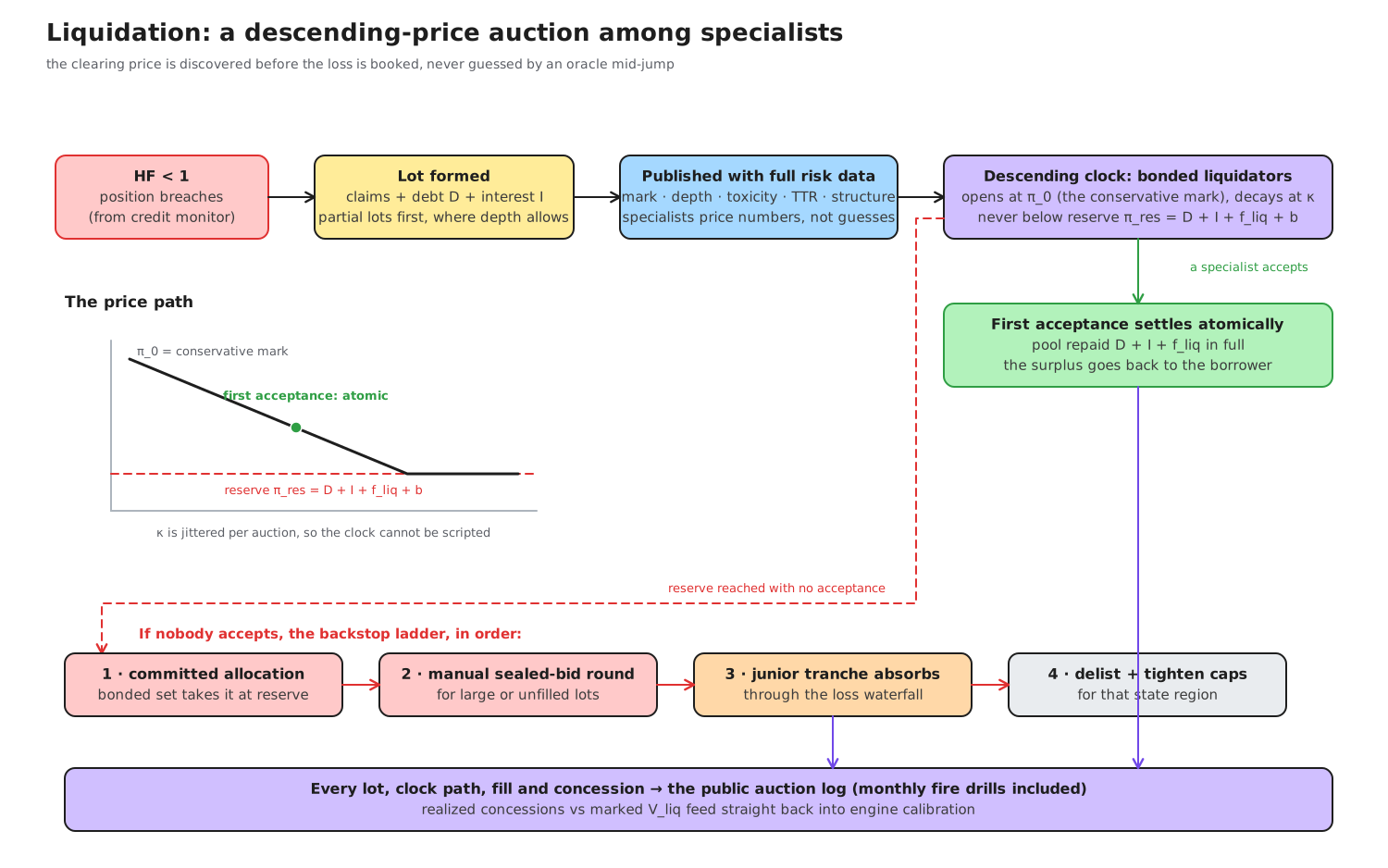
When a health factor falls below 1, the position is offered as a lot carrying its full risk data from CUSP Risk, so specialists price it on real numbers instead of guessing.
The price descends
A descending-price clock runs among bonded liquidators, opening at the conservative mark and falling toward a reserve that covers debt, interest, fee, and a buffer.
First acceptance settles
The first bid to accept settles atomically. Any surplus above debt and costs goes back to the borrower, so liquidation takes what it must and nothing more.
The price path
In one line
The auction opens at the conservative mark and walks down toward a floor that covers debt, interest, fee, and buffer. The first acceptance settles atomically, and everything above debt and costs goes back to the borrower.
The reserve is the part that protects the protocol: the clock never falls below the debt plus its costs, so a cleared lot always covers what it was meant to.
Launch requires at least five bonded, SLA-bound liquidators, and the clock
rate κ is jittered per auction so the descent schedule cannot be scripted in
advance.
The sealed terminal RFQ
Near resolution, a public descending sale stops working: the price clock walks down in the open while the collateral can jump terminally on the next piece of news, and every watcher knows it. For that window, CUSP Clear runs a sealed terminal request-for-quote instead: verified specialists submit sealed quotes for the lot, and the best quote clears it. The wind-down still happens; it just does not broadcast its own descent while a terminal jump is in play. This path is distinct from the descending auction and exists because public descending sales fail against terminal jumps.
The settlement waterfall
When a liquidation settles, proceeds follow a fixed order:
- debt and interest are repaid first;
- clearing and protocol costs are separated;
- remaining surplus returns to the borrower;
- the liquidator receives the event collateral.
Backstop and record
If no specialist clears a lot, a backstop ladder takes over so the position still gets resolved rather than left open. Every auction, cleared or not, is written to a public liquidation log; see transparency.
To prove the mechanism out before any real borrower depends on it, the protocol runs 2 to 4 fire-drill auctions a month on treasury-built lots through the live mechanism. They are indistinguishable from organic lots at auction time and flagged on the public tape only afterward, so the unwind path carries a real operating record before the first distressed loan ever reaches it.
CUSP Clear is reusable clearing infrastructure: it can serve multiple credit applications rather than requiring every lender to build an independent liquidation network. The clock rate and buffer sizing are in the CUSP whitepaper.