
Settlement Advances
The market type that pays holders of resolved claims immediately and collects face value at settlement.
A market resolves, your claim won, and it is now worth its full face value. The venue still does not pay you for hours or days. A settlement advance finances that wait. Borrowers see it in the product as Instant Redeem; the rest of these docs use the market-type name.
Settlement advances are their own market type under CUSP Markets: the collateral is a resolved, unsettled claim, and the term equals the settlement lag. A resolved claim carries no price risk and no informed counterparty, which is why this market type prices differently from credit against a live position.
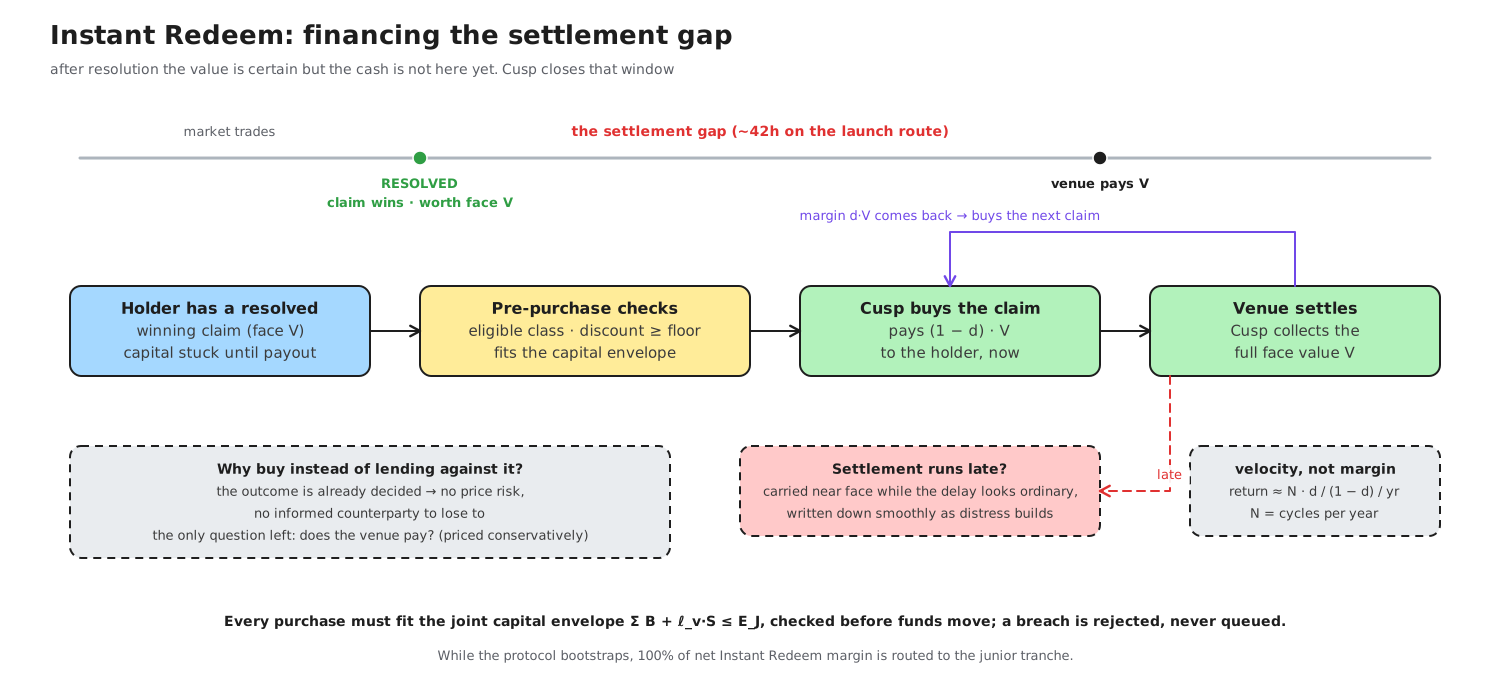
The settlement gap
Between resolution and payout you hold something decided but not yet paid: the value is certain, the cash is not here. For a trader who wants to redeploy, that gap is dead time. A settlement advance closes it.
How it works
CUSP buys the resolved claim from you and pays now, then collects face value from the venue when it settles:
In one line
CUSP buys the claim a little below face value and collects the full amount at settlement. Because the money comes back within hours or days and goes out again, the economics run on speed of reuse, not on the size of the discount.
The discount stays small on purpose. A modest spread earned many times over, as claims resolve and the capital recycles, is where the return comes from.
Why buy the claim instead of lending against it
Lending against a live position and buying a resolved one look similar and are not. The outcome is already known, so there is nothing left to misprice and no informed counterparty to lose to.
| Loan vs live position | Settlement-advance receivable | |
|---|---|---|
| Outcome | Undecided | Already resolved |
| Price risk | Yes | None |
| Adverse selection | Yes | None |
| Open question | Borrower solvency | Whether the venue pays |
The one remaining question is whether the venue actually settles, and measured failure rates are inflated conservatively before anything is priced.
Eligibility and delays
Only resolved claims that clear the eligibility gates get purchased. At launch that means mechanically resolved claims and seasoned verified-feed claims; judgment-resolved claims are excluded from purchase. Every purchase is checked against the joint capital envelope before funds move, so a breaching purchase is rejected outright, never queued.
If a settlement runs late, the claim is carried at face while the delay still looks ordinary, and written down smoothly as distress builds. The formal treatment is in the CUSP whitepaper.
While the protocol bootstraps
Until the calibration record matures (k < 2), 100% of net settlement-advance
margin is routed to the junior tranche, building the first-loss
buffer that protects senior depositors before the track record can.